Showing posts with label God. Show all posts

Friday, May 29, 2015

The Comfortable Church: Who is God's Best?

This is a preaching manuscript for my Expository Preaching Class at International Graduate School of Leadership, February 11, 2015. 

The True Love Waits Dilemma
I have come to somewhat despise the True love Waits movement and what it has done in my life and even to a handful of church leaders and pastors. It's not really their fault. It's not like their teachings are unbiblical. I actually do believe in waiting for the right time with regard to marriage and sex. The problem is actually what my generation of church leaders have noticed about how we grew up as a result of True Love Waits. We were told to wait for God’s best, and in turn, be God’s best ourselves.

But the question then is, who is God’s best? How do you become one? You see for me, the True Love Waits movement caused me to view God unknowingly as the ultimate vending machine. That he would give me a super car Lamborghini of a wife: Expert on the bible, has generations of disciples under her network of disciples, and has the perfect Christian family! But as we all know it, God doesn’t really give super cars or even supermen and women. He can do that, but in whose terms are we defining the super wife? The super husband? The best that God has to offer us?

Kidding aside, in the same way,  this caused me not just to view “God’s best” differently from God’s point of view, but also caused me to become the youth leader most churches define as a textbook growing and maturing Christian. That as I long as I attended church, I was going to be just fine and and would naturally grow up like a good church boy should! 

photo credit: wagmuna.com
However, I found myself time and again, not making the cut and not fitting the bill as "God's Best". I felt that if church people knew about who I really was, they would see me as I was: Not good enough. True enough, I wasn't the kid who stood out for the right reasons. I was not good enough to remember bible verses and was not great at answering bible questions in Sunday school. So as I grew up in church, I did my best performing "church" and tried to look like a choir boy should and presented myself as “God’s Best”. It also shaped and affected how I treated kids my age. Not just with choir girls I tried to impress, but even with other “troubled” kids: the weird ones, quiet ones, the loud and awkward ones, the confused ones, and the ones with the tattoos... Kids like myself just trying to fit-in and be welcomed. 


I was not aware of it, but I was actually furthering myself away from how God truly viewed me. I somehow faked my way through Sunday School, and hid how I truly felt all because the church was filled with textbook church-loving boy-next-door types. I wanted to be like them to fit in but I didn't want to. I couldn't. Yet I struggled to try because I wanted to fit in badly. So to those who didn't fit the bill? Those who were not choir boys and choir girls? They're nothing but trouble. They're outcasts. They all tried their best to fit in, but they couldn't.

In the same way, in light of Luke 18:9-14, Jesus turned the world upside down by radically challenging the notions and stereotypes people had about the kingdom of God. People thought they had an idea of who would make the cut to enter in. They thought they had it all pegged as to who truly is Gods Best

Yet as Jesus revealed in this parable, peoples ideas then were far from the beating of Gods heart, and far from who truly made the cut in his kingdom.


Revisiting an Old Story: The Pharisee and The Tax Collector
So Jesus taught about the parable of the tax collector and the Pharisee because as Luke recorded it, he wanted to paint the picture of how Jesus and his disciples saw and experienced first-hand how people had become cold and judgmental. How they had drawn lines and boundaries among each other, reverting to trusting their own morality and righteousness by treating others poorly and with contempt (v. 9). This then set the story up by which Jesus, in front of the crowds, described two contrasting personalities: a Pharisee praying to God and giving thanks that he was not like a sinner, like the tax collector (v.11), tremendously happy and secured of his stature as a religious man who fasted and gave tithes regularly (v. 12). While the other, a measly, sinful, hated and ridiculed tax collector, beating on his chest hard, praying and asking for God's forgiveness (v. 13). 

The question then, in light of Gods Kingdom and in light of the parable is this: who truly makes the cut? Who can enter God's kingdom? Why is it that the tax collector, a despised and corrupt sinner, considered righteous and justified by Jesus as opposed to the religious leader, the expert of scripture, the devoted spiritually upright Pharisee (v. 14)? Why doesn't the Pharisee make the cut? Wouldn't he be the obvious choice? 


Figuring Out the Kingdom of God
The answer here is that the kingdom of God is not for those who believe they can earn their way in, but rather for those who believe that they can’t (John 3:16; Romans 5:8; Ephesians 2:4-5). Perfection is not exactly what God looked for back then and is surely not looking for the same today. God is not looking for the most well-versed bible scholar, the most eloquent and active leader, one with the most disciples, the one with the most time spent at church bake sales, medical missions and orphanage outreaches. 

Rather, God is looking for those who turn toward him like an ever dependent child, earnestly, constantly in need of the warmth, security and care of the loving arms of a father (v. 14; 18:8, 15-17). 

It doesn’t matter then what one has and can accomplish, where a person comes from, her family background, or the content of his bank accounts, or even his past failures, her current struggles, her numerous broken relationships and one night stands. What matters most is that the heart is in its rightful place. A heart that is humble and meek, a heart seeking for forgiveness, mercy and grace, exactly just like the Tax Collector. 

Dents, scratches and rough patches unseen in the naked eye can envelope even the mightiest of super cars, the flashiest of Lamborghinis. It is in the same way true with us as a people. People will always have scars, unresolved family issues, past hurts, heartaches and pains. Yet, in spite of having the same kind of unresolved issues and having known the truth of God’s love through Christ, why are we still struggling with how we view and treat other people? Why do we try to tailor fit ourselves and our churches, hoping that we all would be the boy and girl-next-door types, trying hard to look and sound like choir boys and girls? The truth is, God's love abounds for everyone, for all people who seek and desire him earnestly, humbly and repentantly (Matthew 7:7-8)? Yes, even for the tattooed ones, the broken ones, the "back sliding" ones, God's kingdom is for everyone (Romans 8:38-39)


Even inside our churches, why are we still treating gossip as holy sharing of confidential prayer items? Why are we still arduously comparing successes and failures, analyzing them as if we truly know people's motives and minds? Why do we still pass through the hallways of our churches, our campuses, our dorm rooms and kitchen tables wearing a fake, warm smile?

If we are all truly about community, about truth, about God and about Jesus and about the kingdom of God, then why are we still not coming clean with probably our most difficult issue: PRIDE. 


The Truth about "God’s Best": We All Are 
Even when I was in my ugliest, struggling young self, a kid trying his best not to succumb to peer pressure, temptation and to raging hormones, I was actually in God’s standard, “God’s best” not because of who I am, but because of who Christ is (Galatians 2:17-21). Yet I could not embrace the truth about my faith, about being saved by grace, all because of pride. You see, pride blinds us from viewing ourselves as recipients of grace, and it puts us in a pedestal of religiosity that contrasts and veers ourselves away from those who are not like us, those who won't fit the bill, those who won't make the cut. So then pride destroys how we ought to view people: with grace, mercy, empathy and patience. 

I learned and experienced this truth the hard way, that at the most difficult and painful event in my life, I expected wrath, judgment and ridicule from my youth group. So as I confessed my sin and struggles to my youth leaders and pastors, to my surprise, I found the weirdest of responses. I was embraced. I was assured.

I wasn’t given a painful ear-popping sermon, nor was given the rod and the spanking. I was rebuked hard. I was corrected with the truth of scripture. Yet I was also assured of my place as a disciple, a valuable leader, and a friend. I had fallen into sin, but what my leaders showed me was a compassion I had never felt before. They taught and reminded me that I had not fallen out of my relationship with them, and more importantly, I had not fallen out from the loving assurance and forgiveness of God. 


Photo Credit: trystanowainhughes.files.wordpress.com
As a young leader then, I could not understand and comprehend how I was not asked to strip off of my leadership roles and not asked to stay away from fellowship. Instead, I felt a tighter bond and friendship from my ates and kuyasAs I recovered, I walked side by side with God and with my my leaders not just with bibles, not just with discipleship books and mentoring materials. My ates and kuyas walked alongside me through basketball, mountain biking, food trips, and movie dates. 

And in moments I needed a shoulder to cry on as a result of loneliness, despair and grief, they were there at my worst... still choosing to accept me, patient with me, a sinning, miserable and struggling young man.


Kingdom of God Applied: Real Grace
So this is what it means to be truly humble, to be truly rid of the very same pride that clouded the Pharisee’s hearts. Are our hearts truly in its rightful place, or are we still faking it, still playing "church", pretending as “God’s Best”? How have we viewed, treated and talked about other people? If the Tax Collector would show up in our midweek service, in our lobbies, our cafes and our lunch tables, what would be our heart's response? 

Photo Credit: http://epicinvitation.com
In view then of God’s forgiveness and mercy through Jesus Christ, we too ought to dispense the very same grace just as it was granted to us, and begin to see ourselves and other people the way God sees us. At the end of the day, like the Tax Collector weeping for God’s mercy, we all will find acceptance in God’s kingdom as “God’s best” not because we can earn our way in, but because we understand that we can’t. 


Our acceptance is in God, in his loving arms as our father, welcoming us through Jesus Christ. 

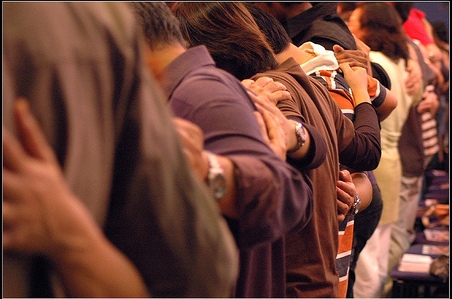
Though we struggle day by day with sin, God willing through the lens of grace, like the Tax Collector, may we too beat and pound our chests in grief. May we, hand in hand as a community, find ourselves all in the same boat, all in need of God’s loving arms, all in need of His mercy and his grace. 

Wednesday, March 6, 2013

Making Christ Known: From Laguna to Manila and Beyond

Greenhills Christian Fellowship (Ortigas)
Know Christ and Make Him Known
Greenhills Christian Fellowship (GCF), since its expansion in 1990 and through the leadership of the late and former Sr. Pastor Dr. Luis Pantoja, Jr., has established itself as an active team player in God’s worldwide ministry. Through its guiding motto: To Know Christ and Make Him Known, GCF has planted various satellite churches in strategic areas in the country and abroad. By the Lord's direction, the growth of GCF can be traced back not just from its founding Pastor Rev. David and wife Patty Yount, but ultimately from the overall mission and vision of the Conservative Baptist Association of the Philippines (CBAP) [4]. 

Conservative Baptist Association of the Philippines (CBAP)
CBAP, founded in 1958, had only five member churches through the Fellowship of Baptist Churches in Southern Luzon [1]. Since then, CBAP now has more than around 500 churches all over the Philippines, and still growing [2]. What contributed to the growth of the association was programs like the “center approach.” It was the association’s church planting strategy to start building churches in Metro Manila and not just in the provinces [4]. The association also had the “0-200” program, which aimed at planting two-hundred churches in a ten-year span throughout the Philippines [4]. It was through these programs that brought upon the birth of churches including GCF, currently the biggest church under CBAP [3]. CBAP had always been ministering and planting churches mostly to rural and provincial cities. But through GCF and other Metro Manila churches, the association was able to plant churches in strategic areas in urban Metro Manila  [4]. This became one of the reasons why GCF found its first home in Greenhills, San Juan City [3]. 

Conservative Baptist Association of the Philippines
GCF’s Beginnings
GCF was established through the missionary effort and strategic church planting initiative of CBAP’s leadership which included Luis Pantoja Sr., (The father of the late Sr. Pastor) in partnership with Conservative Baptist Foreign Mission Society (CBFMS) members Rev. David and Patty Jo Yount [4] [5].
Pastor Love Tira along with the Younts, during late 70's toward the 80's, saw and experienced first-hand what the Lord was doing through discipleship and small groups, their committed relationship building, their proximity to the suburban community of Greenhills, and the ability of their ministry to adapt and relate with their target audience then, the "influencers" of society. Also, prior to its current location in Ortigas, GCF resided at the Greenhills Sound Production, at the Medecor Building along Ortigas Avenue during the late 70’s. The church, which was growing close to a thousand in members, desired and prayed for relocation within the San Juan-Ortigas Avenue area [6]. But after countless failed inquiries with various lot and building owners along the Ortigas Avenue strip in San Juan, GCF together with CBAP’s leadership was led by the Lord instead to the neighboring, emerging “empty parking lot” in Ortigas Center, Pasig, right across EDSA [6]The Lord proved faithful to the church by providing GCF finally a lot of their own at a large discount, and at an area now considered as an important business district, home to various local and multi-national corporations, and home to a thriving residential area surrounded by malls and condominiums [3]. 

GCF-Ortigas Main Worship Auditorium
Photo Credit: Pastor Jon Las
GCF Satellite Churches
According to Pastor Love Tira, GCF expanded, as envisioned by CBAP, through the challenge he and Dr. Luis Pantoja had given to selected growth groups toward the building of satellite churches in their respective communities. The church planting strategy entitled “Church transplanting,” enabled growth groups to minister to their communities and make Christ known through satellite church. Pastor Love, under the leadership of Sr. Pastor Dr. Luis Pantoja, Jr., led the charge, planting the initial batch of churches in Alabang, Pampanga and Bulacan during the early 90’s. It was a time of great harvest as GCF began to expand its borders [6]. Throughout the years, From its roots in Laguna to the growth of GCF in Ortigas, down to the major cities of the Philippines, GCF has established satellites in various key cities: Alabang – Muntinlupa (GCF South Metro), Taytay, Rizal (GCF East), Commonwealth, Quezon City (GCF North), Batangas City (GCF Batangas), Pampanga (GCF San Fernando), Cebu City (GCF Cebu), Bicol (GCF Naga), Bulacan (GCF Malolos), Marikina (GCF Marikina Valley), Legaspi (GCF Legaspi), Laguna (GCF Sta. Rosa), North Edsa, Quezon City (GCF Northwest), Makati (GCF Makati), Bicutan-Paranaque (GCF ParaƱaque), Fairview, Quezon City (GCF Northeast) and Baguio (GCF Baguio). However, the work did not stop there [5].

GCF Connect (Call Center-BPO Ministry) with Pastor BJ Sebastian
Photo Credit: GCF Connect (Facebook)
From Manila to Toronto
GCF also on May 6, 2007 established its very first satellite overseas, GCF Toronto [7]. A year after Toronto, the establishment of GCF Peel followed, followed by GCF Vancouver, GCF Calgary, GCF York and GCF Winnipeg [8]. What began in Ortigas, has now arrived across the Pacific thanks to the Lord's leading and his faithfulness. Dr. Narry Santos, the Sr. Pastor of GCF Toronto, has been spearheading this growth and has been instrumental in embracing the vision that CBAP had ingrained in GCF through the Yount's and through Dr. Luis Pantoja, Jr. 

CBAP and GCF Today
Today, CBAP has set its sight toward “Vision 2025”, as it plans to plant 2025 churches by 2025 with the vision of CBAP churches multiplying churches [3]. CBAP plans to plant churches with the strategy of 1) Establishing churches for missional reproduction, 2) Energizing the body for health and growth, 3) Equipping authentic leaders for health and growth, and 4) Empowering people for community transformation [2]. 

The SHED (Weekly Ortigas Community Outreach)
Photo Credit: Racquel Tira
Thanks to this vision of CBAP, the foundation built by the Younts, the vision of Dr. Pantoja, the heart of Pastor Love Tira, the current leadership of Dr. Larry Pabiona, and the fire of former and current Pastoral Staff, Board of Elders, Deacons, and the many faithful lay-volunteer men and women leaders, GCF expanded and continues to expand by taking to heart the challenge by GCF’s mission of “Making Disciples for Christ Philippines and beyond” and vision of “Lives and Communities Transformed through Christ” through the core values of God’s word and growth groups. Simply put, that is: To know Christ and make Christ known [5].

Kindly answer at least one of the following discussion questions below: 
1. It is often said and observed that large "mega churches" like GCF tend to lose it's sense of community and family atmosphere. Do you agree? How can large churches like GCF address this concern? What are some ways churches like GCF foster a sense of community in the church? 

2. GCF is situated at a strategic location in Ortigas Center in Pasig and have been ministering to the community through various means like the GCF International Christian School, Turning Point (Bi-monthly singles-young adults fellowship), The SHED (weekly community outreach) and Connect (call center small group ministry). But GCF has also been involved in global missions through the One Gospel Conference (Biennial Missions Conference), Kairos (Missions awareness training and equipping), Wetfoot (Short-term missions) and through its support various agencies and missionaries. Shouldn't GCF focus specifically its ministry and its resources for the community in Ortigas? 

3. GCF and its satellite churches maintain a special relationship but are built and established in such a way that each satellite would become independent, thriving church who would also plant churches (like GCF North, GCF South Metro, GCF Toronto etc.) Would you agree that GCF should maintain control and leadership to future church plant and GCF satellites? If not, then how can GCF improve its partnership with its satellite churches ministry-wise at the same time ensure that autonomy and authority is preserved per satellite church? 

Bibliography
[1] Kohl, Manfred. The Churches in the Philippines: A Research Project with Special Emphasis on Theological Education. Mandaluyong City, Philippines: OMF Literature, 2005.

[2] Conservative Baptist Association of the Philippines Vision 2025 Blog "http://cbapvision2025.blogspot.com/" (accessed February 5, 2013).

[3] Pantoja, Noel. E-mail message to author. February 7, 2013.

[4] Guillermo, Merlyn L. Protestant Churches & Missions in the Philippines. Quezon City, Philippines: Philippine Council of Evangelical Churches, 1983.

[5] Greenhills Christian Fellowship, "http://gcf.org.ph/pages/about/" (accessed February 4, 2013).

[6] Tira, Unity E. Interviewed by author. Nokia C3 Sound  Recoder Recording. February 4, 2013.

[7] Greenhills Christian Fellowship Toronto, "http://www.gcftoronto.org/" (accessed February, 2013).

[8] Canadian Baptists of Western Canada, 
"http://cbwc.ca/wp-content/uploads/2012/05/GOWESTIssue9.pdf" (accessed February 4, 2013).

Wednesday, February 20, 2013

Prayer in Chains


I ask forgiveness from thee
For how this wild heart flees
Passions that is not stilled
Desires that burn within
Yes Lord, this mind flies astray
To and fro scripture’s ways
Choices shifted by waves
Apart from love and grace
I ask forgiveness from thee
For this heart and mind seeks
In chains and on my knees
By thy love, be set free

Tuesday, December 25, 2012

Unchanging God (Everlasting)


The inspiration for this song is the word "Elohim" and "El Olam".

Bible.org describes that in the Hebrew language, the plural form of EL means the "strong one." It is used to name false gods, but when used of the true God, it is a plural of majesty and intimates the trinity. It is especially used of God's sovereignty, creative work, mighty work for Israel and in relation to His sovereignty (Isa. 54:5; Jer. 32:27; Gen. 1:1; Isa. 45:18; Deut. 5:23; 8:15; Ps. 68:7).

One of the compunds of El is El Olam, meaning "The Everlasting God." It emphasizes God's unchangeableness and is connected with His inexhaustibleness (Gen. 16:13).

This song is simply and plainly about who God is: His greatness. His Rule.

Watch-out for the full-band version coming this 2013, along with other original Youth L.I.V.E. songs! For updates, check-out: www.facebook.com/gcfyouthlive

UNCHANGING GOD (EVERLASTING)
Words and Music by Dags Miguel

Verse 1:
Lord, You are Creator
You are the Mighty One
Lord, You are Forever
You are the "El Olam"

Verse 2:
Lord, you are the Master
You are the Holy One
Lord, You are Sustainer
You are the "El Olam"

Chorus:
Unchanging God
Everlasting, Everlasting You are
Unchanging God
Everlasting, Everlasting You are
Unchanging God

Bridge:
In Your name we dance
In Your name we shout
In Your name we praise
In Your name we sing

Thursday, December 20, 2012

The Easy Way Out

GCF Youth L.I.V.E.'s #Prayer247
Trust in the Lord with all your heart, and do not lean on your own understanding. In all your ways acknowledge him, and he will make straight your paths. -Proverbs 3:5-6 

We just have to have it our way... because in the end, its all about us. We claim that life presents us with circumstances that enable us to make decisions based on what feels right, what seems logical. We feel we have been left with no other choice but to simply take what we think is the 'best' option available. But our view in life can be at times clouded by fear, dampened by doubt, covered by hurt, shattered by pain... numbed by sin. It distorts our view on being able to make a Godly decision. Consider and see what God has to say in the matter through prayer, through counsel of Godly, mature people and finally through his word, the Bible. Run to him. Ask him. Wait on him. Because faithful men and women will not rely on themselves. They rely and trust on God who provides a way to those who faithfully ask from him.

Tuesday, November 27, 2012

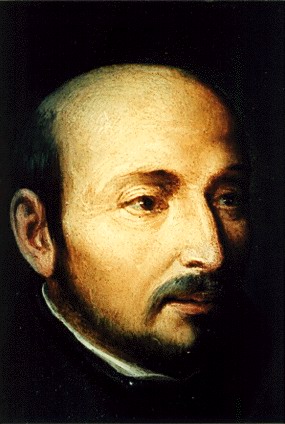
LaSallian meets Ignatius of Loyola

Ignatius of Loyola
Having grown up and having been reared by La Salle through high school and college, it became second nature for me and my co-LaSallistas to simply dislike the boys from the hills of the Katipunan. Now that I'm years removed from college, and having been able to develop friendships with Ateneans (which thankfully enabled me to change my perspective on the so-called "rivalry"), my curiosity regarding 'The Ateneo' has led me to one of the current ironies of my life: spending much time studying the life and works of the founder of the Society of Jesus (Jesuit) himself, Ignatius of Loyola.

How Ignatius met the Lord
Ignatius did not experience a typical, normal childhood. At an early age, he was orphaned due to the tragic death of his parents, and was subsequently taken in by family friends. His encounter as well with God was unlike that of typical church-goers, finding God in probably the most painful and most trying time of his early life. Ignatius, in the middle of battle as a soldier, suffered a very severe leg injury that rendered him immobile and incapacitated. He needed time to recuperate and heal, and it was a toilsome and difficult time in his life. However, in the process of physical recovery, he also found spiritual healing. His isolation from the outside world became the opportune moment for him and the Lord to finally meet intimately. In isolation, he read through writings and accounts of noble saints and their faithful service and devotion to God. He read how they lived and how they served God. He met the Lord in pain through the stories of noble men of faith, and had become the comfort for both his physical and spiritual struggle. However, despite the spiritual awakening, Ignatius’ life experienced further hardship (http://bin.jesuits-chgdet.org/wp-content/uploads/2011/03/Partners_WI03-4_pp16-17.pdf, accessed October 8, 2012).

Struggles and Difficulties
Having decided to equip himself for God, Ignatius studied in Spain and still went through many difficulties. He was abandoned by friends, ridiculed, faced inquiries about his beliefs, and even suffered physical beatings from his detractors (http://www.newadvent.org/cathen/07639c.htm, accessed October 8, 2012). But through it all, it was his stern spiritual walk with God and the early trials in his life that contributed and inspired the recording, writing, practice and teaching of arguably his major contribution to Christianity, his Spiritual Exercises.

Ramon Ma. Bautista, S.J. records in his book “Hearts Burning: The Consciousness Examen as an Authentic Ignatian Formation in Discerning Love” that Ignatius was a truly passionate man of God. He deeply loved the Lord and gave himself deeply to service of God and for God’s people. Service was his primary goal and priority in life, and it was also what he preached and taught to his followers.
19th century Karshuni manuscript of the Spiritual Exercises of Saint Ignatius of Loyola
Spiritual Exercises
According to Bautista, Ignatius wrote about the following: 1) How God’s servant should give the highest possible glory to God all the time, and 2) highlighted the importance of the centrality of God in one’s life. He wrote about 3) Jesus Christ, about his passion, death and his resurrection, and 4) man's ensuing natural response to his own sinfulness in view of Christ. He also wrote about 5) the joy man would receive and find through the grace of God and by the triumph of Jesus Christ from death.

Ignatius' impact to the Church
The book would be evaluated by Papal censors and was officially approved and commended by Pope Paul III for legitimate ministerial use (http://www.newadvent.org/cathen/07639c.htm, accessed October 8, 2012). As described by the Pope himself, Ignatius’ work was “...full of piety and holiness and that they are and will be extremely useful and salutary for the spiritual profit of the faithful.” (http://www.jesuit.org/ignatian-spirituality/spiritual-exercises/, accessed October 9, 2012).

Ignatius’ work in the Spiritual Exercises left a great blue print and manual for teachers, missionaries and ministers on how to properly treat their calling as God’s representatives, and leaving believers a very useful guide and reminder on living up to their identity in Christ as workers of the church. Ma. Christina A. Astorga, in her dissertation about Ignatius records that, “In relation to this fundamental engagement of persons in decision making, Ignatian discernment is the distinctive contribution of Ignatius' Spiritual Exercises to humanity and to Christian spirituality.” Indeed, despite a seemingly outdated material, it is amazing to see how the exercises can still be used today by believers, reflecting what it means to truly be a believer and follower of Christ.

As revealed by his work and his life, it seems that even St. La Salle himself, the man of God who championed education and social service to the poor and needy, would benefit much from the teachings and the lifestyle of Ignatius. Maybe, it doesn't always have to be black and white, left or right, or even Green or Blue.

Questions for further discussion
·         Are trials, difficulties and hardships (abandonment by friends and also physical beatings like what Ignatius experienced) essential and a “must have” for church leaders, workers and volunteers?

·         Should church leaders, workers and volunteers follow and submit entirely to his/ her organization’s policies, rules and guidelines in ministry and in personal life, or should they plainly follow scripture? 

·    God desires that his servants simply love him in everything they do, so is love for people even fully essential and necessary in gauging effective ministries? Why/ why not? 

Sources

Astorga, Ma. Christina. Ignatian Discernment: A Critical Contemporary Reading for Christian
Decision Making. ATLA Religion Database EBSCOhost. http://www.search.ebscohost.com (accessed
October 16, 2012).

Bautista, Ramon Ma. Hearts Burning: The Consciousness Examen as an Authentic Ignatian Formation
in Discerning Love. Makati City, Philippines: Bookmark, Inc, 1990.

Link, Mark S.J. “The Life of St. Ignatius Loyola: A Prayerful Introduction.” jesuits-chgdet.org. 
http://bin.jesuits-chgdet.org/wp-content/uploads/2011/03/Partners_WI03-4_pp16-17.pdf (accessed 
October 8, 2012).

Loyola Press. “St. Ignatius Loyola”. http://www.ignatianspirituality.com. 
http://www.ignatianspirituality.com/ignatian-voices/st-ignatius-loyola/ (accessed October 8, 2012).

Pollen, J.H. “St. Ignatius Loyola”. http://www.newadvent.org. 
http://www.newadvent.org/cathen/07639c.htm (accessed October 8, 2012).

The Society of Jesus in the United States. “The Spiritual Exercises of St. Ignatius Loyola”. http://www.jesuit.org/. http://www.jesuit.org/jesuits/wp-content/uploads/The-Spiritual-Exercises-.pdf (accessed October 9, 2012).

The Society of Jesus in the United States. “Frequently Asked Questions.” http://www.jesuit.org/. http://www.jesuit.org/jesuits/wp-content/uploads/The-Spiritual-Exercises-.pdf (accessed October 9, 2012).

http://www.hmml.org/preservation10/OLM.htm (accesed November 26, 2012).


http://www.sacred-texts.com/chr/seil/index.htm (accessed November 26, 2012).

Tuesday, September 11, 2012

The Comfortable Church: Breaking the Comfort

The problem remains for the church today: We are just too comfortableThe "problems" we see are but a speck compared to the reality of the world we live in today, a world beyond the confines of our comfortable "problem filled" lives, a world that desperately desires a hope... a world that needs Jesus Christ. 

So the questions is: "What can I do? How do I get out of my comfort zone?"

The bible did not complicate things when it recorded how Jesus commanded us to take part in sharing God's blessing of salvation (Matt. 28:18-20). The misconception is that a Christian has to follow one ideal formula in sharing the love of God through Christ. It doesn't have to be that way. We can do it in many different ways. How? In our case today as a comfortable church, breaking the barriers of sharing the love of Christ and breaking the comfort can be done in two ways:

1) PRAYER

Have you been proactive in praying for the concerns of other people? Or have your prayers been focused on only yourself? Do you remember your country men during their time of need, ceased on helping when relief operations have slowed down, or have you been helping out still?

What we can do is simply pray. We should continue to pray for our country men still affected by the recent floods, who have lost loved ones and have lost their homes. Relief operations may have stopped but our prayers continue, our prayers should remain.

We can also pray also for the unreached people groups remaining in the Philippines and in other parts of the world! Get to know them through The Joshua Project, a website dedicated to research about ethnic groups who have yet to know Jesus Christ. Pray for these groups together with church members through the upcoming 1Gospel Conference, a conference encouraging young people aware about the power of prayer in missions!


We do not have to leave our country to be involved in cross cultural missions. We do not need disasters and relief operations to remember the needs of the less fortunate. We bring the love of Christ to other people through the power of our faith in the Lord, and it is proven in earnest, honest prayer.


2) PARTNERSHIP

Like prayer, partnership is not a one-time thing. It is being able to connect to people who need a more definite, clear, and real gospel message. 

Join an NGO, look for an orphanage, school, children's hospital or community and help the needy on a more concerted, intentional and consistent basis. Show love to them not by just simply reading to them the story about Jesus' sermons, but by sitting beside them, talking to them, asking them about their dreams, aspirations, having lunch together with them, interacting with them side by side. You can even support and partner by simply buying a shirt from Liberty Street Clothing and help survivors of human trafficking, child sexual abuse, or extreme poverty.

Pray and Partner for the Armed Forces of the Philippines
(IGSL - PMA Ministry Week, Sept 2012)

So this is how we roll up our sleeves, how we can be less comfortable, be less concerned about ourselves. This is how we can be thankful, how we can be exposed, how we can pray. This is how we can break church norm and obey God's command to "Go and make disciples", how we can share God's blessing of salvation today. 

People need the gospel message personally applied, not impersonally preached. 

Monday, September 3, 2012

The Comfortable Church

My kids in Kaunlaran High School in Navotas (through the partnership of International Graduate School of Leadership-Asia and Breakthrough Community Church-Navotas) wrote the following down when I asked them about their dreams and aspirations: 


"Know Christ"

"Change"

"Be Helpful and responsible"

"Expect more knowledge (Know) about God"

"Help my parents"

"Help my family"

"I want to help others to be God's followers"

These are what these kids hope for, what they desire in life. They desire a life out of poverty, out of daily financial hardship, out of broken down communities, and they desire Christ. They desire God. 

A couple of months back I asked the Lord why he wanted me to serve in this community. God's answer? The kids themselves. He wanted to expose me to his heart... a heart that longs to be connected and reunited to his people from all cultures, nations, from every tongue, every tribe and from every land. 

A recent study shows that most churches today do not share the GospelThis is what is happening in churches nowadays.

In light of the study, one of the problems today is that as a church, we look inward, instead of outward. We fret about poorly air-conditioned worship auditoriums, frown upon bad sound systems, and complain about the poorly seasoned lunch offered in our monthly ministry meeting. These kids? They have their algebra class during midday, under the shade of the quadrangle stage due to the lack of classrooms. The Track and Field team practices on 40 feet of parking space on worn out training shoes. No grass, no track oval. They miss out on school 1-2 times a week during the rainy season due to constant and regular flooding in the city. That is their reality. 

We are simply just too comfortable. The "problems" we see are but a speck compared to the reality of the world we live in today, a world beyond the confines of our comfortable "problem filled" lives, a world that desperately desires a hope... a world that needs Jesus Christ. 

The bible says:

"Be not afraid, but speak, and hold not thy peace"  (Acts 18:9b)

"I am not ashamed of the gospel of Christ"  (Romans 1:16)

"(Pray)...that I may speak boldly, as I ought to speak"  (Ephesians 6:18-20)

"Be not thou ashamed of the testimony of our Lord" (2 Timothy 1:8a)

"We were bold...to speak the gospel of God"  (1 Thessalonians 2:2)

God wants us to reach out to all people, and we achieve this by not just simply sitting comfortably, sipping freshly brewed coffee in the posh cafes where we hold weekly bible studies. God wants us to get out of our comfort zones, roll up our sleeves, and to confidently go. 

Are you too comfortable? Be thankful. Be exposed. Pray for divine appointments outside your comfort zone. Share God's blessing of salvation today.

Wednesday, January 18, 2012

Holding Grudges

Esau held a grudge against Jacob because of the blessing his father had given him. He said to himself, “The days of mourning for my father are near; then I will kill my brother Jacob.” – Genesis 27:41

Lord, I feel angry, bitter and have much hate in my heart. Will you heal my heart, give me peace, and give me the strength to finally forgive. AMEN.